This comparison is written by CardCounter. It uses the official sources listed below, checked on October 6, 2026, and is not an independent live benchmark.
What to take into the demo
- Square is worth evaluating for its documented retail inventory, payments and supported hardware ecosystem.
- Use exact card identity and collection acquisition to test the fit for a singles-heavy shop.
- Compare complete plan, hardware and processing costs using your own transaction mix.
Begin with your shop’s product mix
This is a CardCounter-authored comparison, researched from Square’s official US pages on October 6, 2026. It is intended to help owners prepare useful demonstrations. We have not independently tested Square in a live card shop or measured a speed advantage for either product.
Square’s retail page documents inventory history, bulk receiving, purchase orders, barcode labels, payments and reporting. Those are meaningful retail capabilities, including for shops selling sealed products and accessories. Plan and hardware requirements need confirmation for your intended setup.
A shop buying substantial quantities of singles has an additional question: how do inspection, printing identity, an accepted offer and acquisition cost stay connected? CardCounter’s workflow centers on those relationships. The fit depends on how much of your day is ordinary merchandise retail and how much is acquiring and managing individual cards.
Build a comparison around tasks
Use the same sample records in each demonstration. The Square column below gives questions to test, not claims that the product lacks a capability.
| Task | CardCounter workflow | Ask to see in Square |
|---|---|---|
| Sell a specific single | Exact printing, language, finish and condition tied to stock | How the item and variation structure preserves those details |
| Buy a customer collection | Custody, inspection, separate offers and recorded acquisition | Your complete buying process, including any additional tools |
| Trace acquisition cost | Allocated cost and visible missing-cost records | How costs enter reports and how incomplete records appear |
| Receive sealed stock | Local supplier orders and partial receiving | The required plan, receiving process and supported labels |
| Take a card payment | Confirm approved provider and device setup separately | Supported Square hardware and your actual processing terms |
Give one similar printing a different outcome
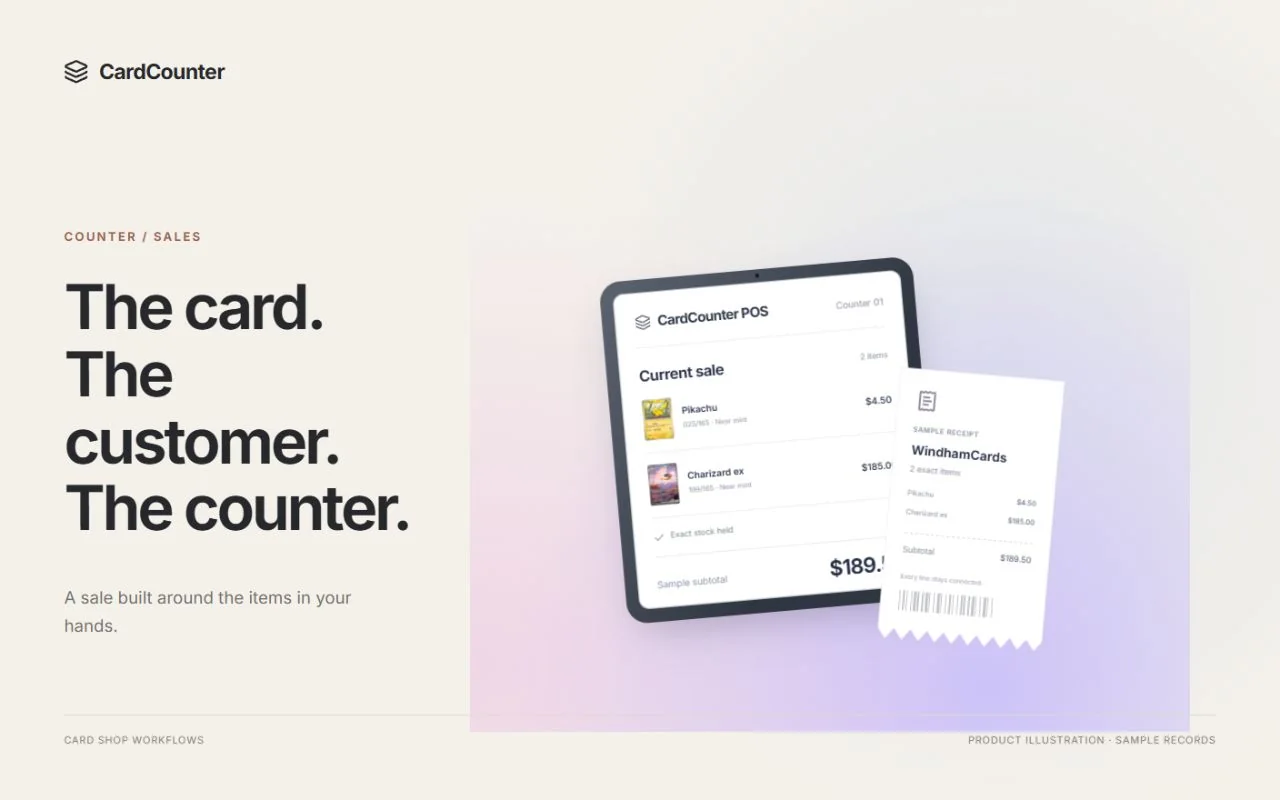
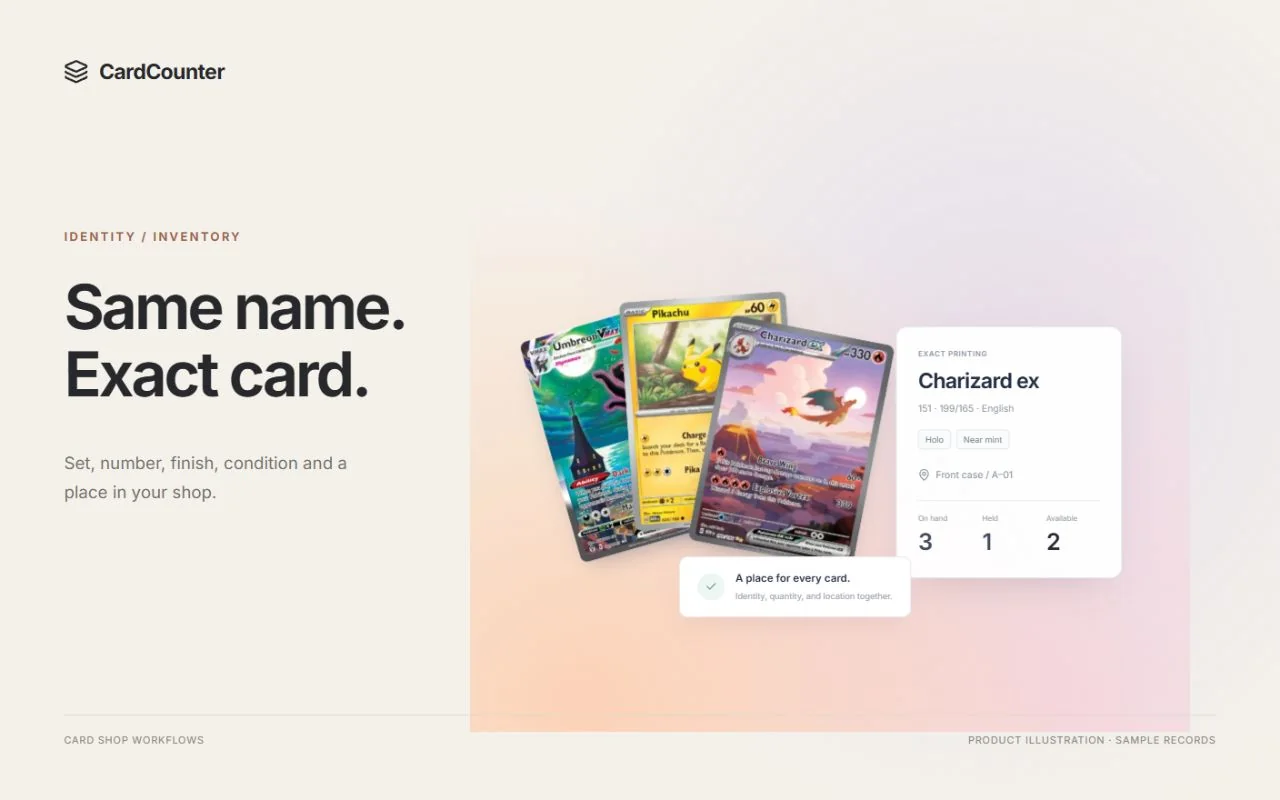
Create two printings that a new cashier could easily confuse. Give them different conditions, costs and locations. Sell one, inspect its receipt, then check the remaining stock. Staff should be able to explain which physical item moved without relying on a long product title that everyone has learned to decode.
Next, hold the last available copy in a cart and search for it from another counter. Ask what the quantities mean and how a parked or interrupted sale is recovered. This is a useful evaluation of inventory behavior in any POS, regardless of its audience.
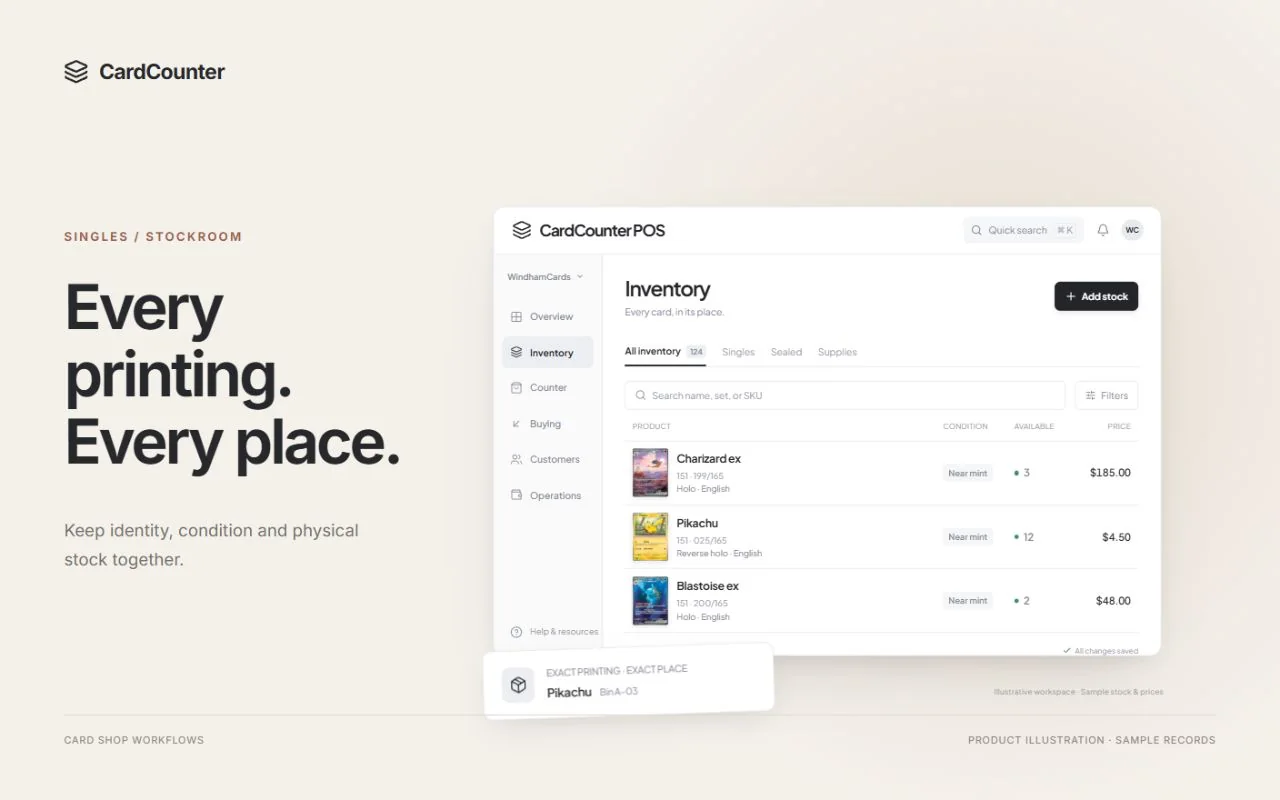
CardCounter retains exact printing and merchant condition on its inventory record, with bins, holds and stock history. If you are moving from a custom item library, bring examples of how your existing naming conventions encode those fields. An import trial should preserve their meaning, not just the visible names and total units.
Follow the collection beyond the offer
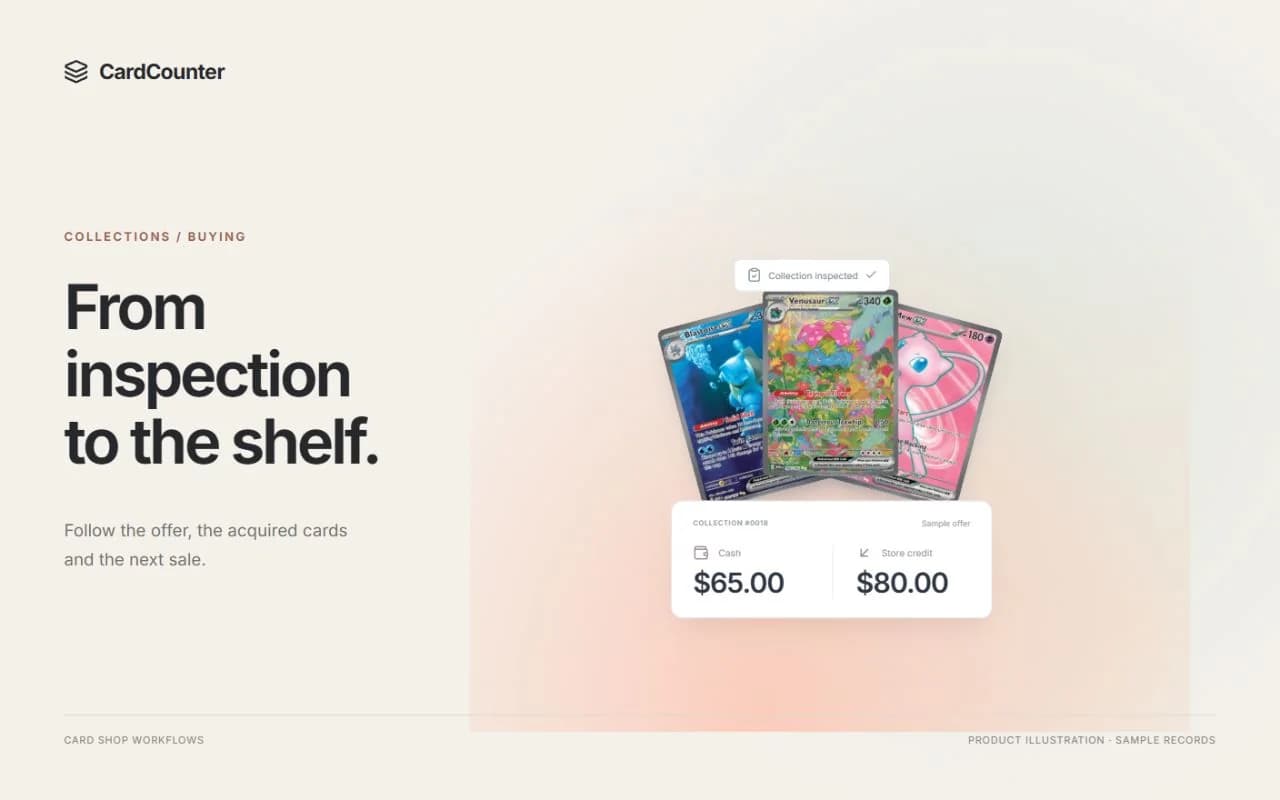
Buying from customers is a different job from receiving a supplier carton. Staff may hold the cards while an owner reviews them, reject part of the batch, change condition and offer cash or credit. The accepted acquisition must be distinguishable from a draft offer and from physical custody.
CardCounter connects those steps to the customer, inspected lines, accepted amount and allocated item costs. Ask to see the resulting credit history and stock record after acceptance. Then correct a mistake through the demonstrated process, so your team knows how to handle a real exception.
During a Square demonstration, show your actual collection-buying procedure and ask which parts belong in Square and which depend on another app or staff process. Do not assume that a general retail inventory feature includes every acquisition task, or that a task is unavailable simply because the public overview does not describe it.
Give payment and hardware setup their own trial
Square documents supported retail hardware and payment options, including its own devices. Confirm the exact device, printer and barcode scanner combination for your country and checkout layout. The public feature page also describes full and partial refunds; try a return using the payment method your shop will accept.
CardCounter uses a browser workspace or the Windows desktop option, with internet required. The Windows option is included with the company subscription; confirm the supported customer release during onboarding. This comparison is not an offer of ready live card-payment transport. Confirm payment availability and peripheral compatibility before your cutover; a counter screen alone does not establish reader approval or settlement.
Test a receipt, label, interrupted sale and a close with a small deliberate cash difference. Include the staff member who normally closes. A device that fits the owner’s desk may still be awkward behind a busy counter.
Price the workflow you intend to use
Square’s US pricing page distinguishes Free, Plus and Premium plans and separates software pricing from payment-processing charges. Check the current retail entitlements and the charges for your locations, devices and transaction methods. A no-monthly-subscription option does not make payment processing or hardware free.
CardCounter confirms subscription terms, migration scope and third-party services in a walkthrough. Core includes the shop workspace with team-managed prices. Growth adds connected market pricing, English physical Pokémon camera recognition and a shared market-data allowance. Its local photo-grading overlay is also Growth-only and provides an estimate rather than an official grade.
Build a monthly comparison using your real mix of cash, card, online orders, locations and optional services. Include any extra tool you need to complete collection buying or maintain marketplace stock. Then agree which connected workflows are available and tested. This article does not promise a live Square, Shopify or marketplace connection to CardCounter by choosing a plan.
Choose by the work your staff can complete
Square deserves a closer look when its retail and payments ecosystem fits your store and your card workflows can be demonstrated clearly within the proposed setup. CardCounter deserves a walkthrough when exact singles, collection acquisitions and customer credit are central to the day.
Keep the decision practical. Ask your cashier and buyer to try the same tasks, document extra steps and confirm the complete cost. A successful demonstration should leave you with a rollout plan and resolved responsibilities, not only a polished presentation.
- Create, locate and sell two similar printings with different conditions.
- Acquire part of a collection and trace both item cost and customer credit.
- Receive a partial supplier order and explain the outstanding quantity.
- Use the intended payment device, then follow an original-receipt return.
- Review the full monthly quote, a representative import and support ownership.
Questions before you choose
Can a card shop use Square?
Square offers retail inventory, checkout and payments tools. Assess the fit with your own exact-card data and collection-buying process, and confirm any plan, supported hardware or additional app requirements in a demonstration.
Why compare a specialist card-shop POS with Square?
The question is how your team completes its work. Singles-heavy buying may make exact identity and acquisition records central; another store may prioritize a broader payments and retail setup. Test the same tasks before choosing.
Does CardCounter include scanning on Core?
No. The current Pokémon camera recognition and photo-grading workspace require active approved Growth access. Core includes the shop workspace with prices managed by the team. Photo grading is an estimate, not a professional grading service.
Official sources
Features, packages and availability can change. Use the current provider documentation alongside your own demonstration.
- Square US: Retail POS features and hardware Checked October 6, 2026
- Square US: Software plans and processing pricing Checked October 6, 2026
Product and company names belong to their respective owners.